Latest News | Media Hub at Browns Distribution

Media Hub

Industry insights, company news and team happenings. Stay in the loop with all the team at Distribution House.

Our top truckin' tracks. What we're currently listening to...

Featured

Route Optimisation: Smarter Logistics for Customers and the Planet

Author: David Mollart, Head of Ecommerce, Browns Distribution Two lorries can leave the same depot carrying exactly the same freight. One makes money. The other loses it. The difference often comes down to decisions made long before the engine...

Industry

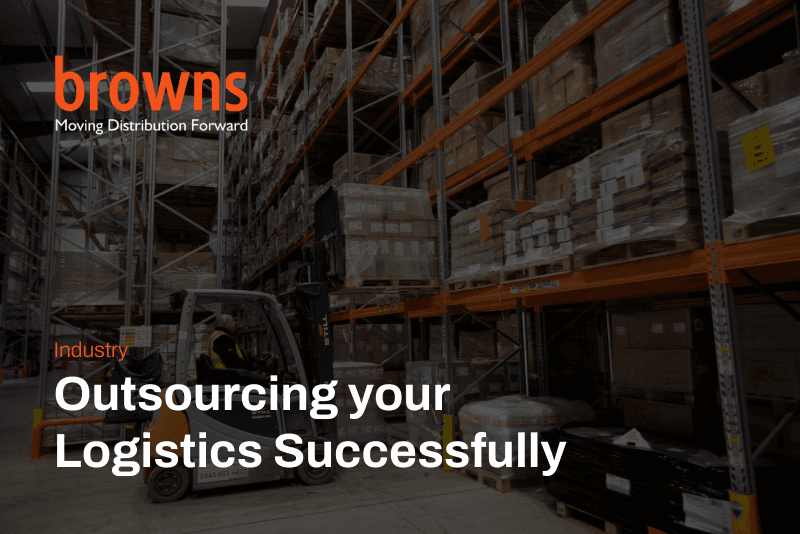
A Guide to Outsourcing Your Logistics Successfully

Outsourcing logistics is no longer something only large organisations consider. In today’s fast-moving supply chain environment, more businesses are turning to specialist partners to improve service levels, control costs, and gain the flexibility needed to grow. But outsourcing successfully isn’t just about moving pallets from A to B. It’s about choosing the right partner, setting expectations early, and building a relationship that supports your wider business goals. In this guide, we’ll explore why outsourcing is growing, what it means, the benefits and risks, and how to make the transition smoothly. Why logistics outsourcing is growing The logistics landscape has shifted significantly, with businesses under increasing pressure to deliver reliable and cost-effective service. Key drivers include: Rising customer expectations Customers now expect fast delivery, accurate tracking, and flexible options as standard. Delays or lack of visibility can quickly impact satisfaction and repeat business. Driver shortages and labour pressures Ongoing challenges around driver availability and warehouse staffing are making in-house operations harder to sustain. Warehouse space and cost challenges Warehouse space is increasingly expensive and difficult to secure, especially in key UK regions, making expansion costly and slow. Ecommerce growth and rising returns Ecommerce has added complexity, particularly around fulfilment speed and returns, which can be unpredictable and resource-heavy. The need for peak-time flexibility Seasonal demand and promotions can quickly overwhelm internal operations. Outsourcing provides scalable capacity without long-term investment. What outsourcing logistics actually means Outsourcing can look different depending on your business needs. Most commonly, it includes: Transport and distribution Warehousing and storage Fulfilment (pick, pack, dispatch) Returns management Value-added services (labelling, kitting, repacking) 2PL vs 3PL: what’s the difference? 2PL (Second Party Logistics): Focused on transport only 3PL (Third Party Logistics): A broader solution including warehousing, fulfilment, and systems For many growing businesses, 3PL offers greater flexibility and visibility. Signs you’re ready to outsource Outsourcing isn’t always the right step early on, but there are clear indicators it may be time. You may be ready if: Your warehouse is at or near capacity Delivery issues are affecting customer experience Costs per order or pallet are rising You can’t scale quickly to meet demand Your team is focused on logistics over growth You lack tracking, reporting, or visibility Returns are becoming difficult to manage If several of these apply, outsourcing can help create stability and free up internal resource. The benefits of outsourcing logistics A strong logistics partnership delivers more than operational support, it strengthens service and supports growth. 1. Scalability and peak management Capacity can flex in line with demand, particularly during seasonal peaks. 2. Improved service levels and reliability Established processes and networks help improve delivery performance and reduce disruption. 3. Stronger systems and reporting Outsourcing often provides access to: Real-time tracking Inventory visibility Performance reporting KPI dashboards 4. Reduced operational risk Risk is spread across larger infrastructure, reducing reliance on limited internal resources. 5. Access to wider distribution networks Providers offer established UK networks that are costly to build independently. 6. Focus on core business Internal teams can prioritise sales, customer experience, and growth instead of day-to-day logistics. Common outsourcing mistakes Outsourcing can be highly effective, but only when approached correctly. Choosing a provider based on price alone Lower cost can lead to poor service or hidden charges. Focus on value and capability. Unclear service expectations Lack of clarity can cause misalignment. Define responsibilities and service levels early. Poor onboarding or rushed transition Rushed implementation can lead to delays and stock issues. Plan properly. Underestimating systems integration Without proper integration, visibility suffers and errors increase. Not agreeing KPIs early KPIs provide structure and accountability, define them from day one. Lack of communication structure Without regular communication, small issues can escalate. How to choose the right logistics partner A successful partnership depends on fit, not just service offering. Consider: Sector experience (e.g. retail, ecommerce, FMCG) Service levels and coverage Network capability Flexibility to scale Compliance and accreditations Systems and visibility Culture and communication The best partners operate as an extension of your team. What successful onboarding looks like A structured onboarding process is key to a smooth transition. This should include: Discovery and data gathering Understanding volumes, products, requirements, and pain points. Site visits and process mapping Ensuring the solution is practical and efficient. Cutover planning Defining timelines, stock transfer, systems, and responsibilities. Contingency planning Preparing for potential issues to minimise disruption. Stakeholder responsibilities Clear ownership on both sides. The data you need to provide before outsourcing Accurate data is essential to building the right solution. This typically includes: Shipment profile (pallets, parcels, mixed loads) Delivery locations and frequency Peak volumes and seasonal trends SKU profile and handling requirements Returns profile and volumes Service level requirements Current pain points Better data leads to smoother onboarding and more accurate pricing. Communication and governance: keeping the partnership working Outsourcing works best as a partnership, not just a service contract. A strong structure includes: Weekly operational calls Monthly KPI reviews Quarterly business reviews Clear escalation routes Continuous improvement processes Regular communication keeps both sides aligned and proactive. Outsourcing done well is a growth strategy Outsourcing logistics isn’t about losing control, it’s about gaining capability, flexibility, and resilience. With the right partner, clear expectations, and a structured approach, it becomes a strategic advantage: improving service, reducing risk, and giving your business room to grow. If you're exploring a more scalable, reliable approach to logistics, our contract logistics services are designed to support growing businesses with flexible warehousing, distribution, and fulfilment solutions. Get in touch with our team to discuss your requirements and see how we can support your operation.

CompanyCommunity

Supporting the Next Generation in Logistics

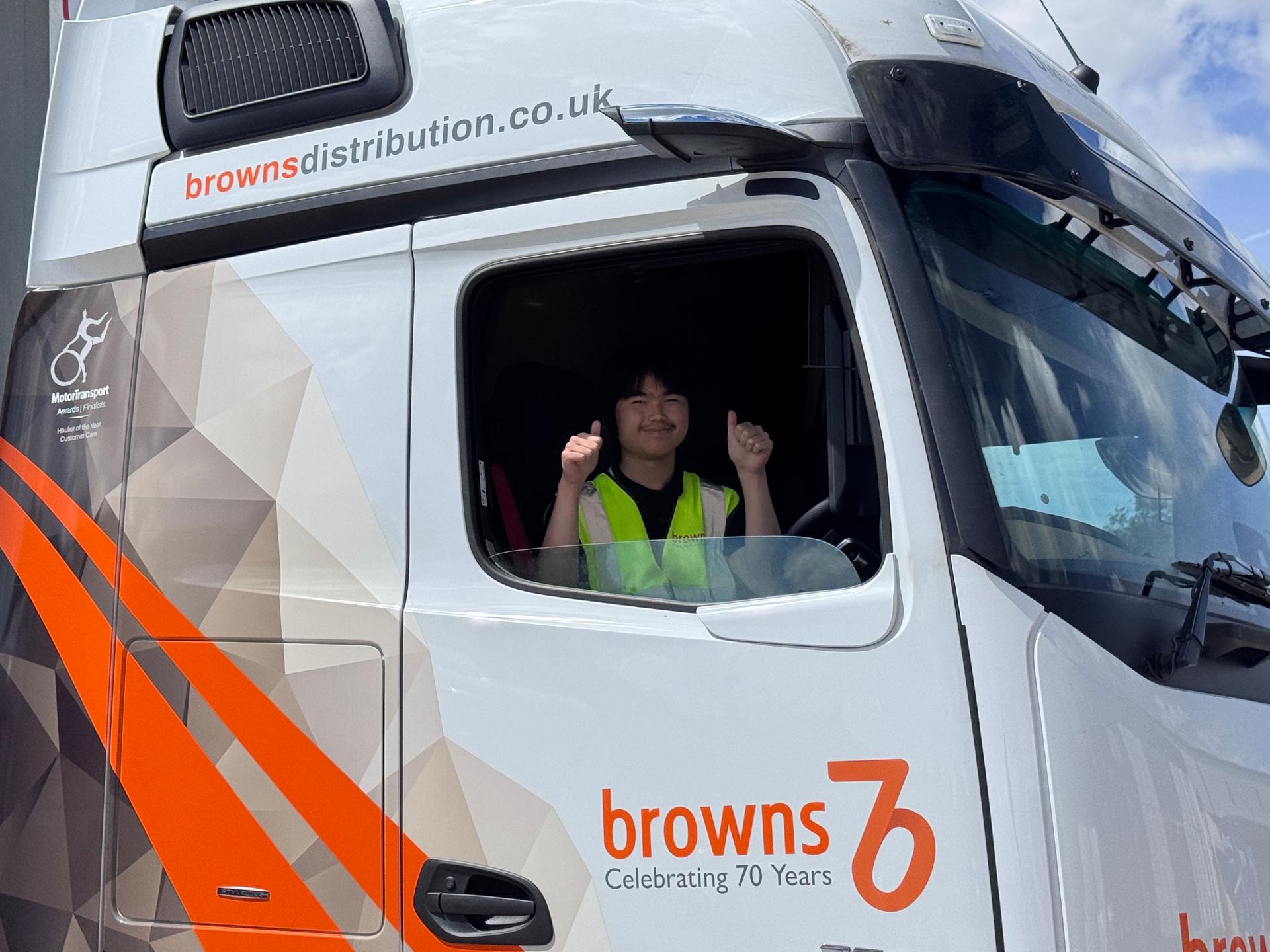
This week, our Media Hub has been handed over to Luo Chen , who joined Browns Distribution for a week of work experience. Throughout the week, Luo has been getting a behind-the-scenes look at life in a busy logistics business, spending time with different departments and taking on a range of marketing and business projects. As part of the takeover, this article has been written by Luo, sharing his experience, what he learned during the week and his thoughts on working at Browns Distribution. Without further ado, it's over to you, Luo Chen! "Before my work experience placement, I had virtually no knowledge about logistics. Browns has changed that. As a local Year 10 student, my placement was arranged for the week connecting June and July of 2026. It was scheduled from Monday to Friday, 5 hours each day. The aims of my placement were to: Learn about essential work skills by experiencing a work environment. To understand if this sector would be suitable for me in the future. With Tom Armstrong, Marketing Manager , guiding me through various aspects of Browns, I have felt like I have thoroughly achieved these aims. Throughout the week, I have learned from, inquired into and shadowed the roles of various staff, including the Driver Training Manager, Customer Support Team, Marketing Manager, Warehouse Manager and PalletOnline Manager. I have discovered various, often overlooked complexities of the logistics sector and how they all intertwine through the different departments in Browns in order to create the direct services that logistics aims to offer. It has been incredibly interesting for me to realise the finer details of how businesses operate and the integral roles and contributions of every staff member to a smooth service for customers. Such a broad range of perspectives and advice has truly provided the plethora of valuable insight needed for me to understand Browns as it really is. I believe that the fact that Browns aims to support the local community and inspire the next generation of logistics professionals is notably commendable; actions which don't lead to profit do not occur in every business, especially through the form of a work experience placement to support local education. I think this accurately summarises what the internal culture is like here - a positive, collaborative and community-oriented one. I am sincerely grateful for this opportunity where I have developed much-needed skills and knowledge, both for a workplace and life in general. I have felt actively engaged in learning about logistics the entire week, and am now considering it a lot more for my future than ever before. Thank you Tom and Browns Distribution!" Luo Chen He

Company

Celebrating 44 Years of Mick Stirzaker at Browns Distribution

Some milestones deserve more than a mention, and Mick Stirzaker’s 44 years at Browns Distribution is certainly one of them. Mick’s story with Browns began in 1982, when he first joined the business and became part of a team that would go on to shape much of his working life. After leaving in 1985, Mick returned in 1989, and from that point on, he became a constant and trusted presence within the company. Over the years, Mick has played an important role in the development of our transport operation and the wider success of Browns Distribution. His long-standing contribution is a reminder that businesses are not built by systems and processes alone, but by people who bring knowledge, consistency and care to their work every day. As Transport Development Manager, Mick’s contribution reaches far beyond a job title. Transport is at the heart of Browns Distribution, and over the years Mick has helped ensure that our operation remains reliable, compliant and ready to meet the needs of our customers. From day-to-day transport planning to compliance, vehicle maintenance and operational standards, Mick’s experience has helped create the structure and consistency that a strong transport business depends on. Over the last four decades, the logistics industry has changed beyond recognition. Regulations have evolved, customer expectations have grown, technology has transformed ways of working, and the demands placed on transport teams have become increasingly complex. Through all of that change, Mick has remained a dependable figure within Browns, bringing calm judgement, practical knowledge and a commitment to doing things properly. "Mick’s contribution to Browns over the last 44 years is something we are incredibly proud of. His knowledge, loyalty and dedication have helped shape our transport operation and support the growth of the business. People like Mick are rare, and we are very lucky to have him as part of the Browns team." David Brown Jnr, Managing Director Mick’s 44-year milestone is not only a reflection of personal dedication, but also of the lasting impact one person can have on a business. His service represents loyalty, leadership and continuity, qualities that continue to make a difference across Browns Distribution every day. For any business, reaching important milestones is never the result of one thing alone. It is built through the efforts of people who show up, contribute, adapt and care about the standards they leave behind. Mick is one of those people, and his contribution has become part of the Browns story. On behalf of everyone at Browns, thank you, Mick, for 44 years of commitment, service and contribution. Your role in our journey is one we are incredibly proud to celebrate.

Company

Strengthening Browns for Future Growth

Browns Distribution has strengthened its board and senior leadership team as Graham Pearson joins the business as Finance Director. Graham’s arrival marks an important step in Browns’ continued development, as the business focuses on long-term growth, operational performance and the next stage of its strategic plans. Graham joins Browns with 25 years’ experience in finance and leadership, having operated at Director level across both UK and international businesses. His career has spanned a wide range of sectors including ecommerce, SaaS, automotive, media and manufacturing. Throughout his career, Graham has played a key role in supporting business growth, acquisitions, system development and change management. This experience brings valuable commercial insight to Browns at a time when the company is continuing to invest in its people, systems and service offering. Commenting on Graham joining the business, Managing Director, David Brown Jnr said: "Graham joining Browns is an important step as we continue to strengthen our board and senior leadership team. His financial expertise, commercial experience and understanding of business growth will be invaluable as we look ahead to the next phase of our development. We are pleased to welcome him to the business and look forward to the contribution he will make." As Finance Director, Graham will lead the finance function and work closely with the board and senior leadership team to support strategic decision-making across the business. His role will focus on strengthening financial performance, supporting operational efficiency and helping to shape the company’s future direction. With Browns continuing to evolve, the Finance Director role will be central to ensuring the business has the financial structure, insight and processes needed to support its ambitions. Graham’s experience across change management, acquisitions and system development will support Browns as it continues to build for the future. Speaking about joining Browns, Graham said: "I’m delighted to be joining Browns. The business has clear ambitions for the future, and I’m looking forward to working closely with the board and senior leadership team to support those plans, strengthen financial performance and help Browns continue to move forward." Graham’s arrival supports Browns’ focus on building a resilient, forward-thinking business with the leadership, expertise and structure in place to support its next stage of growth.

Company

Browns Goes Green for Mental Health Awareness Week

The team at Browns Distribution came together for Wear it Green Day, raising an incredible £233 for the Mental Health Foundation. Held at Distribution House, the day brought the team together in support of an important cause, with green outfits across the site, a team raffle with prizes up for grabs, and Domino’s pizza to keep everyone fuelled throughout the day. Wear it Green Day is part of Mental Health Awareness Week, a UK-wide campaign organised by the Mental Health Foundation. The campaign takes place every May and aims to highlight the importance of good mental health, challenge stigma, and encourage practical action to support wellbeing. The Mental Health Foundation has been leading Mental Health Awareness Week for the last 25 years. As the only UK charity solely focused on preventing poor mental health, the organisation works through research, campaigning, and practical programmes to help build and protect good mental health. Wear it Green Day encourages schools, workplaces, communities, families, and friends to wear green, raise awareness, start conversations, and fundraise to support the Mental Health Foundation’s vital work. For Browns Distribution, it was a fantastic opportunity to bring the team together while supporting a cause that affects so many people across the UK. To learn more about Mental Health Awareness Week, Wear it Green Day, and the Mental Health Foundation’s work to prevent poor mental health, you can visit their website here . Thanks to the generosity of everyone who got involved, donated, wore green, and supported the raffle, the team raised £233, smashing the target that had been set. From green outfits and prize draws to shared conversations and a sense of team spirit, the day was a brilliant reminder that even small actions can make a meaningful difference. A huge thank you to every colleague who took part, donated, wore green, or helped make the event such a success. At Browns Distribution, we’re proud to support initiatives that bring people together, encourage positive conversations, and help make a difference both inside and outside the workplace.

Industry

The Industries Driving Stoke-on-Trent and the Logistics Behind Them

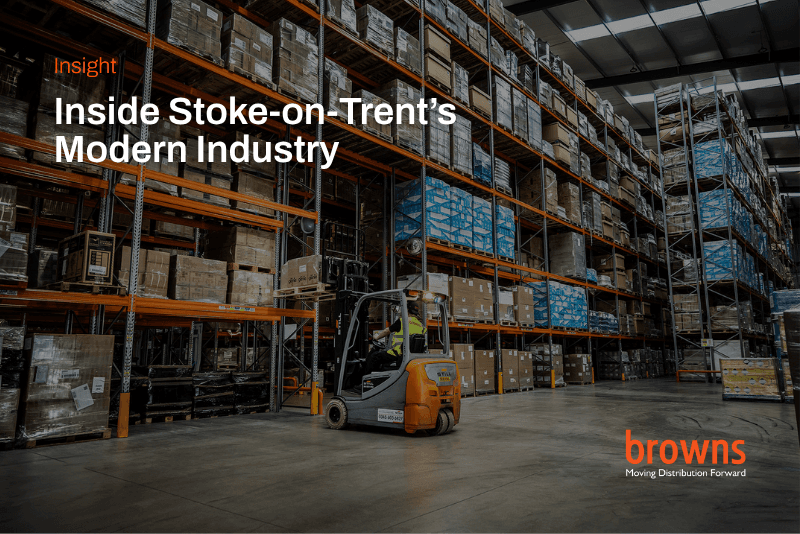
Stoke-on-Trent was built on moving goods... And it still is. Long before pallet networks and online tracking, Stoke-on-Trent was already moving products across the country and around the world. Ceramics from the Staffordshire Potteries ended up in homes and businesses across the globe. Steel left Shelton Bar by rail and road. Factories, workshops and warehouses kept the city working for generations. Stoke has always been a place that makes things and sends them somewhere else. That part of the city hasn’t really changed. Drive around Staffordshire today and you can see how much logistics has grown in the area over the last couple of decades. Warehouses have appeared across industrial estates, distribution hubs sit alongside major road links, and trucks moving through Stoke are now as much a part of the landscape as the industries that came before them. Nearly 70 years after starting out on a quiet street in Tunstall, it’s something we’ve seen first-hand at Browns Distribution. Because while industries evolve, the pressure behind them usually stays the same. Manufacturers still need reliability. Retailers still need stock where it’s supposed to be. Construction firms still work to tight deadlines. And customers still notice very quickly when deliveries go wrong. Stoke and Logistics Stoke-on-Trent will always be linked with the pottery industry, after all, we built our reputation on manufacturing and craftsmanship. But logistics has more recently become one of the area’s biggest industries too. Part of that comes down to geography. Stoke sits in a strong position for businesses distributing goods across the UK. Within a few hours, vehicles leaving Staffordshire can reach huge parts of the country. That matters for: manufacturers retailers builders merchants packaging companies engineering firms food and drink suppliers pharmaceutical companies It’s one of the reasons warehousing and distribution have grown so heavily across the region. Places with industrial roots tend to understand logistics well because they’ve always relied on things moving properly. In this way, Stoke has always been built around supply chains in one form or another. Ceramics There’s probably no industry more closely tied to Stoke-on-Trent than ceramics. Wedgwood, Royal Doulton and Spode are just a few of the world-renowned manufacturers born in the city. And from a logistics point of view, ceramics can be difficult freight to transport. Products are often fragile, heavy and expensive to replace if damaged. One unstable pallet or poor load can quickly turn into a costly problem. That’s why palletised freight became so important for manufacturers across Staffordshire. By securing products properly and reducing unnecessary handling, pallet networks help lower the risk of damage during transport. It also makes storage, loading and nationwide distribution far easier to manage. Construction Construction has always been a major part of any economy, and it’s an industry where delays quickly become expensive. Sites work to tight schedules. Materials are often needed in specific delivery windows. If something doesn’t arrive when expected, the knock-on effect can spread quickly across a project. Across Stoke and the wider Midlands, builders merchants and suppliers move huge amounts of palletised freight every day: paving timber roofing materials bagged products tools and supplies And unlike some industries, deliveries often need to arrive in very specific places, at very specific times. That’s where pallet networks changed things massively. Instead of paying for dedicated vehicles for smaller consignments, businesses can move freight nationwide through shared distribution networks. For customers, that usually means lower transport costs and far more flexibility. Manufacturing For manufacturers, logistics sits underneath almost everything. Delayed materials, damaged stock or missed deliveries can quickly create problems further down the production line. A delayed pallet can hold up production. Damaged stock creates extra cost. Poor communication wastes time that businesses usually don’t have. Over the years, we’ve worked with manufacturers moving everything from delicate products to awkward, bulky freight that needs careful planning before it even reaches a trailer. And most of the time, the businesses we work with value the same things: reliability clear communication knowing somebody will sort problems quickly if they happen That’s where good systems make a real difference too. Live tracking, delivery updates and better visibility across the supply chain help customers stay informed without needing to constantly chase where freight is or when it’s arriving. Retail Retail has probably changed logistics more than any other industry over the last 15 years. Faster delivery expectations, tighter stock control and the growth of online shopping have all increased pressure on retailers to move goods quickly and efficiently between suppliers, warehouses, stores and customers. That’s one of the reasons warehousing and pallet distribution has grown so heavily around Stoke-on-Trent. The city’s location makes it a strong base for businesses distributing goods nationwide, particularly as retail supply chains have become faster and more demanding. At Browns, we’ve worked with retailers and distributors moving stock across the UK for years. And while retail moves quicker than it used to, the basics still matter most: reliable deliveries, good communication and freight arriving where it’s supposed to without delays or damage. Moving Staffordshire Forward At Browns Distribution, we’ve spent decades working alongside businesses across Staffordshire, the Midlands and the UK. Some industries have changed completely over that time. Others have adapted and grown alongside changing customer expectations. That’s become a major part of Stoke-on-Trent’s modern identity. From manufacturers and builders merchants to retailers and distributors, industries across Staffordshire rely on warehousing, pallet networks and nationwide transport every single day. And after more than 70 years , we’re still proud to play a part in keeping those businesses moving.

Company

Driving Forward with New Fleet Additions

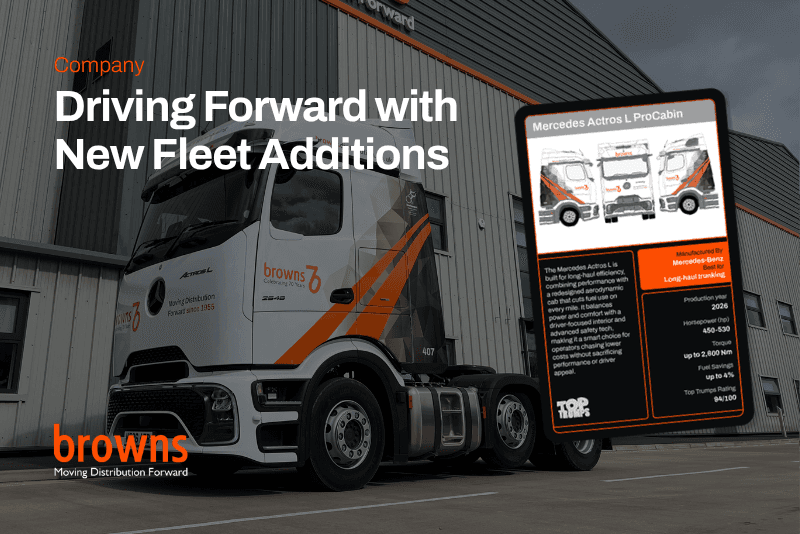
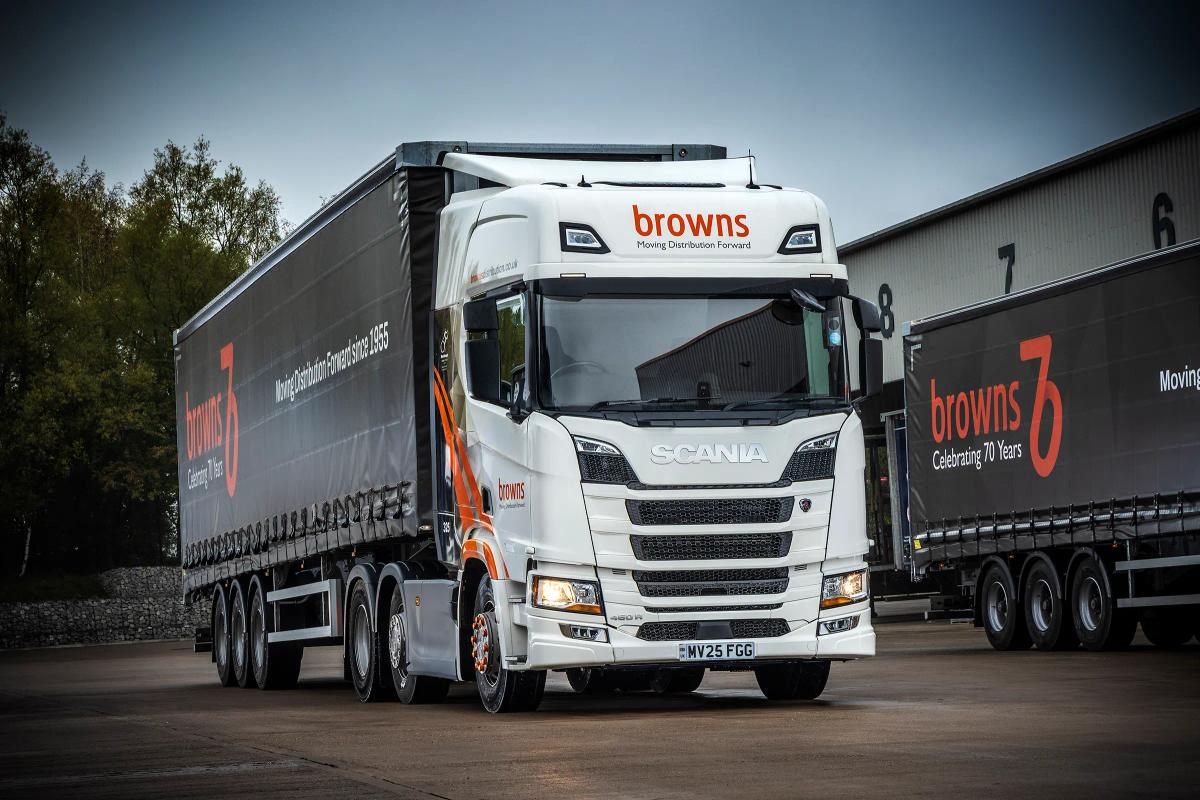
We are pleased to announce the arrival of four new Mercedes-Benz Actros L 2548 trucks, delivered in March 2026, as part of our ongoing investment in a modern and high-performing fleet. These latest additions build on our continued commitment to Mercedes-Benz vehicles in recent years, following the introduction of three Actros 2546 trucks in 2023 and six Actros L 2548 trucks in 2024. The new trucks further strengthen a well-balanced fleet that operates across three leading manufacturers, alongside Scania and MAN. This investment reflects our ongoing focus on efficiency, driver comfort, and safety across its operations. The Actros range is renowned for its advanced technology, fuel efficiency, and driver-focused design, aligning closely with the our operational standards. We also maintain a robust fleet rotation policy, ensuring no articulated vehicle remains in service for more than five years. The new vehicles will be deployed on general haulage duties across the UK. Lindy Crawford, Transport Manager at Browns Distribution, commented: We’ve had consistently positive feedback from both our drivers and operational teams on the Mercedes-Benz trucks. Their reliability, comfort, and the quality of telematics data they provide make a real difference to our day-to-day operations. We’re always looking to invest in the very best equipment to support our teams and deliver the highest levels of service for our customers. The new Actros units are finished in a special 70th anniversary livery, marking the conclusion of our milestone celebrations last year and reflecting both our heritage and our continued commitment to the future.

CommunityCompany

An Egg-cellent Effort for Our Community

We’re proud to share the success of our 2026 Easter Egg Appeal at Browns Distribution. Thanks to the generosity of our team, customers, suppliers, friends and family, we collected 300 Easter eggs, all donated to The Hubb Foundation to support children and families across Stoke-on-Trent this Easter. The Hubb Foundation plays a vital role in the local community, providing meals, activities and safe spaces for young people during the school holidays. Building on the success of our 2024 appeal, we set out to go even bigger in 2026, and thanks to the incredible support received, we did just that. We’d like to give special thanks to Churchill China , eStar Truck and Van Stoke , IAE , and Pro Vision Clothing for their generous contributions, alongside everyone who donated. Every donation, big or small, will help make a difference to families who need it most. A huge thank you to everyone involved, your support and community spirit make initiatives like this possible. At Browns Distribution, we’re proud to give back and support our local community.

Industry

The Role of Technology in Modern Warehousing

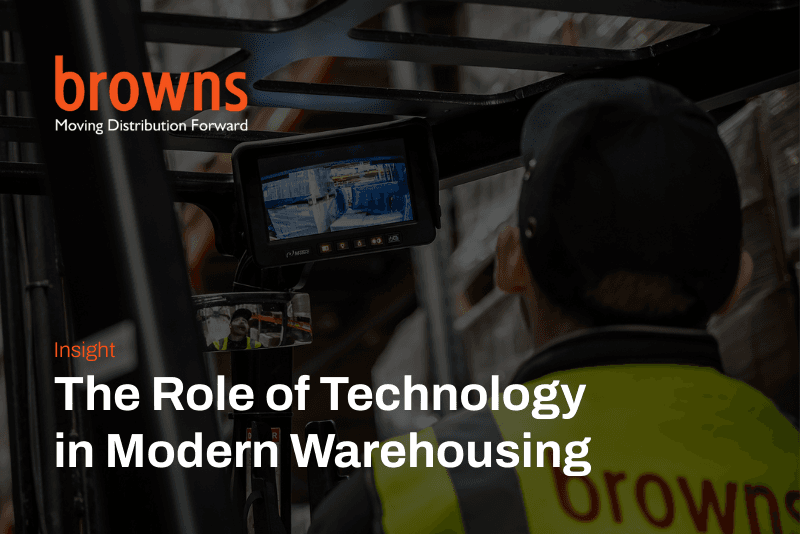
Warehousing has changed dramatically over the last decade, and customer expectations have changed even faster. Whether you’re supplying retailers, manufacturers, e-commerce customers or supporting B2B pallet distribution, the warehouse is no longer just a place to store goods. It has become a critical part of the service engine that drives delivery performance, customer satisfaction, and commercial reliability. Today, businesses expect faster fulfilment, higher accuracy and real-time visibility across their supply chain. At the same time, warehouse operators are facing labour shortages, rising costs and increasing pressure to do more with less. This is where warehousing technology plays a key role, not as a “nice to have”, but as a practical tool to improve control, speed, and consistency. Warehousing isn’t what it used to be Traditionally, warehousing was viewed as a supporting function: receive stock, store it, pick it, dispatch it. Now it’s expected to deliver service levels that directly reflect on the brand, including: Faster turnaround times and later order cut-offs Higher pick and dispatch accuracy Live visibility of order status and stock availability Proactive exception handling before issues becomes customer complaints Even in pallet distribution, where B2B supply chains can sometimes be assumed to be less time-sensitive, expectations have moved on. Customers still want goods handled accurately, delivered on time, and supported by reliable tracking and proof of delivery. Warehousing performance and transport performance are now inseparable, and technology is what connects them. What warehousing technology looks like today When people think of warehouse technology, they often picture robotics and automated picking systems. In reality, modern warehousing technology includes a full mix of systems, tools and automation, many of which focus on getting the fundamentals right first. 1. Core systems At the centre of most operations are the systems that manage the flow of goods and data: Warehouse Management System (WMS) Transport Management System (TMS) ERP integration (so stock and order information stays aligned) These platforms create structure, reduce reliance on manual admin, and provide the foundation for performance improvement. 2. Data capture and accuracy tools Accuracy is one of the biggest commercial drivers in warehousing, and it starts with good data capture: Barcode scanning RFID (where appropriate) Mobile devices These tools reduce manual input and help teams confirm activity at every stage goods in, put-away, picking and dispatch. 3. Automation and equipment Automation can range from simple process automation to physical automation, including: Conveyors and sortation Automated pallet wrapping AS/RS (automated storage and retrieval systems) Goods-to-person systems The goal is not to replace people, it’s to reduce wasted motion, speed up throughput and protect accuracy. 4. Visibility tools Visibility is what customers feel most directly. This includes: Tracking portals Dashboards and KPI reporting Exception alerts and proactive notifications For many customers, the difference between a “good” warehouse service and an “excellent” one is simply knowing what’s happening without having to chase. The WMS explained: the control centre of the warehouse A Warehouse Management System is often the single most impactful technology investment a warehouse can make because it creates control. A well-implemented WMS helps operators: Control where stock is stored Track inventory in real-time Guide pick paths to improve efficiency Support FIFO / FEFO stock rotation Reduce human error Improve auditing and compliance Enable reporting and customer visibility In practical terms, a WMS turns warehousing into a repeatable process rather than a set of workarounds. It makes performance measurable, scalable and less dependent on individual knowledge. Barcode scanning and mobile technology: accuracy at every touchpoint Barcode scanning is one of the simplest technologies in warehousing but also one of the most valuable. When implemented properly, scanning supports: Goods-in verification (correct item, correct quantity) Put-away accuracy (correct location) Picking confirmation (correct item, correct pick) Dispatch accuracy (correct goods on the correct vehicle) This reduces: Mis-picks and shortages Lost inventory Manual admin and paperwork Time wasted investigating stock discrepancies In many operations, scanning and mobile tech provide the quickest return on investment because they remove avoidable errors that cost time, money and customer trust. Automation: what it really means in warehousing Automation doesn’t always mean robots. In many warehouses, the biggest gains come from automating routine tasks and removing unnecessary admin. Examples include: Automated label printing Automated documentation System triggers based on scan activity Automated pallet wrapping AI-assisted forecasting and decision support AI is increasingly being used to analyse operational data, identify patterns, and support better decision-making. For example, AI tools can help predict demand, optimise picking routes, or highlight bottlenecks before they impact performance. Physical automation, such as conveyors or goods-to-person systems, can deliver huge productivity improvements but only when the operation has the volume and consistency to justify it. The key is understanding what you’re trying to achieve: speed, accuracy, labour reduction, or improved throughput. Visibility: the value customers actually feel Many customers won’t ask what WMS you use but they will notice if your visibility is poor. Visibility tools give customers confidence and reduce the time spent chasing updates. This includes: Live order status Proof of delivery links Delivery ETA updates Performance dashboards showing OTIF, damages, inventory accuracy and pick accuracy Exception alerts when issues occur (missed cut-offs, discrepancies, delays) Exception management is particularly valuable. It’s better to flag issues early than to let them reach the customer unexpectedly. When technology helps Technology works best when: Processes are stable and documented Data is clean and accurate Staff are trained properly Reporting is actively used to improve performance Across the industry, technology projects tend to struggle when: It’s layered on top of broken processes Onboarding is rushed The operation is overly bespoke without documentation There is no internal ownership after implementation In other words, technology supports good operations but it doesn’t replace them. What to consider before investing in warehouse technology Before investing in any system or automation, it’s important to identify the real operational constraint. Start by asking: What is your current bottleneck? Space? Speed? Accuracy? Labour? What do you actually need? Better control of stock? Faster processing? Better reporting and visibility? And what will the implementation require? Integration with ERP or e-commerce platforms Realistic implementation timeline Staff training and adoption plan Ongoing support and maintenance The best technology investments are the ones that solve a clear problem, align with the operation’s maturity, and deliver measurable improvements in performance. Modern warehousing is built on speed, accuracy and transparency, and technology is now essential to achieving all three. Whether it’s implementing a WMS, improving data capture through scanning, introducing smart automation, or providing customers with real-time visibility, the goal is always the same: deliver a more reliable service and a better customer experience. At Browns Distribution, we understand that warehousing performance is a key driver of supply chain success, and we continue to focus on practical, proven technology that strengthens control, improves efficiency and supports customer expectations. If you're looking for a warehousing partner that combines operational expertise with modern technology, learn more about Browns Distribution’s warehousing services.

  • a logo
  • a logo
  • a logo
  • a logo
  • a logo

This website uses cookies to improve our site & your experience. See our privacy policy.