Choosing the Right Warehousing Partner in 2026
Happy New Year and welcome to our first blog of 2026!
A new year is a great time to review how your supply chain is working and whether your warehousing setup is really supporting your business.
Whether you’re managing steady volumes or planning for growth, choosing the right warehousing partner plays a big role in keeping stock moving efficiently and customers happy.
In this guide, we’ll cover what warehousing involves, who it’s right for, and what to look for when selecting a warehouse that fits your operation now and in the future.
What Is Warehousing and Who Is It For?
Warehousing is the storage and management of goods before they are distributed, sold, or delivered to customers.
It’s used by manufacturers, importers, wholesalers, retailers, and e-commerce businesses – any organisation that handles physical stock.
Some businesses use warehousing to manage seasonal demand or overflow stock. Others rely on it as a long-term solution to support regular distribution. In both cases, third-party warehousing removes the need to invest in buildings, systems, and warehouse staff, while keeping stock accessible when it’s needed.

Why Warehousing Matters
Warehousing sits at the heart of the supply chain. When it runs smoothly, everything else benefits.
The right warehousing partner can help you to:
- Improve efficiency across your supply chain
- Control storage and handling costs
- Maintain accurate stock levels
- Meet customer delivery expectations
- Scale without constantly changing facilities
But before choosing a warehouse and provider, it’s worth being clear on a few key points:
Your stock profile
What goods are you storing? Are there size, weight, or handling considerations?
Your volumes
Average and peak pallet quantities, plus how quickly stock moves.
Your location needs
Where your customers are based and how often goods need to be moved.
Your service levels
Inbound, outbound, and any additional services required.
Clear answers upfront make the selection process far simpler.
What to Look for in a Warehousing Partner
There’s no shortage of warehouse space available, but not every facility is right for every business.
The ideal warehousing partner should be able to handle your current requirements while leaving room to grow. Key factors to consider include:
- Suitable space for your pallet sizes and weights
- Capacity to manage busy periods without disruption
- Efficient layout and handling processes
- Strong accreditations and safety standards, such as BRCGS and ISO
If your goods require special handling or non-standard pallet sizes, the warehouse needs to be set up for this from the outset.
Spending time on this stage can prevent issues later.
Questions Worth Asking Before You Commit
When comparing providers, these questions can help guide your decision:
- Is there undercover loading and unloading?
- Is the warehouse clean, organised, and secure?
- Are dock levellers in place?
- Is lighting suitable for safe and accurate handling?
- What daily throughput can the operation manage?
- What warehouse management system is used?
- Is the site secured with CCTV and access controls?
- Are racking dimensions suitable for your pallets?
- What stock rotation methods are used?
- What are the RH&D charges (receipt, handling and despatch)?
- What are the costs for container unloading if required?
Clear, confident answers usually point to a well-run operation.
Transparency, Systems, and Site Visits
A strong warehousing relationship relies on clarity and trust.
Any warehousing provider should be open about processes, pricing, and service levels. Unexpected charges and unclear communication tend to cause problems over time.
A site visit is always worthwhile, and something we always advise our potential customers to do. Seeing how stock is received, stored, and despatched gives a much better understanding of how your goods will be handled.
Modern warehouse management systems also play a key role, providing real-time stock visibility and accurate reporting to support better decision-making.
What Are Typical Warehousing Costs?
Pallet storage is usually charged per pallet, per week, with handling charges applied for inbound and outbound movements. However, the warehousing solutions Browns provide are often bespoke, shaped around your volumes, stock profile and operational needs.
Location can also affect cost. Warehousing in the South of England, particularly around London, generally attracts higher rates than facilities in the Midlands or North.
If you’re reviewing your warehousing setup for 2026 or looking for a reliable long-term warehousing partner, Browns Distribution can help.
Our warehousing and storage services are built around secure facilities, experienced teams, and straightforward pricing. Get in touch to discuss how we can support your business this year.
More from Browns
View all articles
Browns Distribution strengthens warehousing operations with Clarus WMS partnership
We're delighted to announce our partnership with Clarus WMS , marking another major milestone in the continued evolution of Browns Distribution and our investment in technology. The introduction of Clarus at our flagship Distribution House facility in Stoke-on-Trent represents a significant achie
A New Chapter Begins at Browns
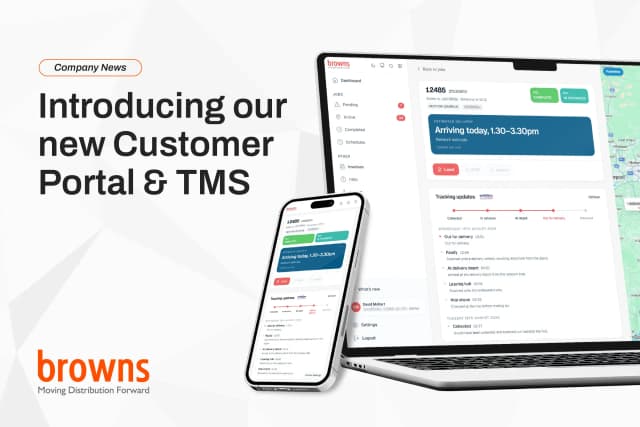
Introducing Touchbase, our new Transport Management System Every major investment Browns has made over the past few years has been driven by the same ambition: to make our business stronger, our service better and our customers more successful. That ambition has shaped the way we've investe
Class 1 Drivers Wanted: Join Browns as we Continue to Grow
Browns Distribution is growing, and we’re looking for experienced Class 1 HGV drivers to join us for the journey. New contract wins, continued business growth and the launch of new systems across the operation mean there’s plenty happening at Browns. As our customer base and transport requirements