A Guide to Outsourcing Your Logistics Successfully
Outsourcing logistics is no longer something only large organisations consider. In today’s fast-moving supply chain environment, more businesses are turning to specialist partners to improve service levels, control costs, and gain the flexibility needed to grow.
But outsourcing successfully isn’t just about moving pallets from A to B. It’s about choosing the right partner, setting expectations early, and building a relationship that supports your wider business goals.
In this guide, we’ll explore why outsourcing is growing, what it means, the benefits and risks, and how to make the transition smoothly.
Why logistics outsourcing is growing
The logistics landscape has shifted significantly, with businesses under increasing pressure to deliver reliable and cost-effective service.
Key drivers include:
Rising customer expectations
Customers now expect fast delivery, accurate tracking, and flexible options as standard. Delays or lack of visibility can quickly impact satisfaction and repeat business.
Driver shortages and labour pressures
Ongoing challenges around driver availability and warehouse staffing are making in-house operations harder to sustain.
Warehouse space and cost challenges
Warehouse space is increasingly expensive and difficult to secure, especially in key UK regions, making expansion costly and slow.
Ecommerce growth and rising returns
Ecommerce has added complexity, particularly around fulfilment speed and returns, which can be unpredictable and resource-heavy.
The need for peak-time flexibility
Seasonal demand and promotions can quickly overwhelm internal operations. Outsourcing provides scalable capacity without long-term investment.
What outsourcing logistics actually means
Outsourcing can look different depending on your business needs. Most commonly, it includes:
Transport and distribution
Warehousing and storage
Fulfilment (pick, pack, dispatch)
Returns management
Value-added services (labelling, kitting, repacking)
2PL vs 3PL: what’s the difference?
2PL (Second Party Logistics): Focused on transport only
3PL (Third Party Logistics): A broader solution including warehousing, fulfilment, and systems
For many growing businesses, 3PL offers greater flexibility and visibility.
Signs you’re ready to outsource
Outsourcing isn’t always the right step early on, but there are clear indicators it may be time.
You may be ready if:
Your warehouse is at or near capacity
Delivery issues are affecting customer experience
Costs per order or pallet are rising
You can’t scale quickly to meet demand
Your team is focused on logistics over growth
You lack tracking, reporting, or visibility
Returns are becoming difficult to manage
If several of these apply, outsourcing can help create stability and free up internal resource.
The benefits of outsourcing logistics
A strong logistics partnership delivers more than operational support, it strengthens service and supports growth.
1. Scalability and peak management
Capacity can flex in line with demand, particularly during seasonal peaks.
2. Improved service levels and reliability
Established processes and networks help improve delivery performance and reduce disruption.
3. Stronger systems and reporting
Outsourcing often provides access to:
Real-time tracking
Inventory visibility
Performance reporting
KPI dashboards
4. Reduced operational risk
Risk is spread across larger infrastructure, reducing reliance on limited internal resources.
5. Access to wider distribution networks
Providers offer established UK networks that are costly to build independently.
6. Focus on core business
Internal teams can prioritise sales, customer experience, and growth instead of day-to-day logistics.
Common outsourcing mistakes
Outsourcing can be highly effective, but only when approached correctly.
Choosing a provider based on price alone
Lower cost can lead to poor service or hidden charges. Focus on value and capability.
Unclear service expectations
Lack of clarity can cause misalignment. Define responsibilities and service levels early.
Poor onboarding or rushed transition
Rushed implementation can lead to delays and stock issues. Plan properly.
Underestimating systems integration
Without proper integration, visibility suffers and errors increase.
Not agreeing KPIs early
KPIs provide structure and accountability, define them from day one.
Lack of communication structure
Without regular communication, small issues can escalate.
How to choose the right logistics partner
A successful partnership depends on fit, not just service offering.
Consider:
Sector experience (e.g. retail, ecommerce, FMCG)
Service levels and coverage
Network capability
Flexibility to scale
Compliance and accreditations
Systems and visibility
Culture and communication
The best partners operate as an extension of your team.
What successful onboarding looks like
A structured onboarding process is key to a smooth transition.
This should include:
Discovery and data gathering
Understanding volumes, products, requirements, and pain points.
Site visits and process mapping
Ensuring the solution is practical and efficient.
Cutover planning
Defining timelines, stock transfer, systems, and responsibilities.
Contingency planning
Preparing for potential issues to minimise disruption.
Stakeholder responsibilities
Clear ownership on both sides.
The data you need to provide before outsourcing
Accurate data is essential to building the right solution.
This typically includes:
Shipment profile (pallets, parcels, mixed loads)
Delivery locations and frequency
Peak volumes and seasonal trends
SKU profile and handling requirements
Returns profile and volumes
Service level requirements
Current pain points
Better data leads to smoother onboarding and more accurate pricing.
Communication and governance: keeping the partnership working
Outsourcing works best as a partnership, not just a service contract.
A strong structure includes:
Weekly operational calls
Monthly KPI reviews
Quarterly business reviews
Clear escalation routes
Continuous improvement processes
Regular communication keeps both sides aligned and proactive.
Outsourcing done well is a growth strategy
Outsourcing logistics isn’t about losing control, it’s about gaining capability, flexibility, and resilience.
With the right partner, clear expectations, and a structured approach, it becomes a strategic advantage: improving service, reducing risk, and giving your business room to grow.
If you're exploring a more scalable, reliable approach to logistics, our contract logistics services are designed to support growing businesses with flexible warehousing, distribution, and fulfilment solutions.
Get in touch with our team to discuss your requirements and see how we can support your operation.
More from Browns
View all articles
Browns Distribution strengthens warehousing operations with Clarus WMS partnership
We're delighted to announce our partnership with Clarus WMS , marking another major milestone in the continued evolution of Browns Distribution and our investment in technology. The introduction of Clarus at our flagship Distribution House facility in Stoke-on-Trent represents a significant achie
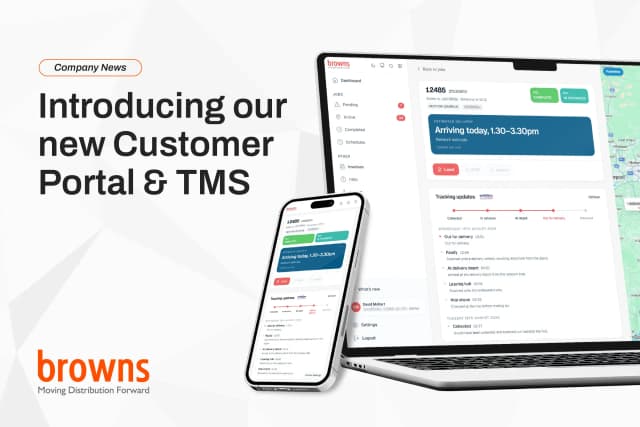
A New Chapter Begins at Browns
Introducing Touchbase, our new Transport Management System Every major investment Browns has made over the past few years has been driven by the same ambition: to make our business stronger, our service better and our customers more successful. That ambition has shaped the way we've investe
Class 1 Drivers Wanted: Join Browns as we Continue to Grow
Browns Distribution is growing, and we’re looking for experienced Class 1 HGV drivers to join us for the journey. New contract wins, continued business growth and the launch of new systems across the operation mean there’s plenty happening at Browns. As our customer base and transport requirements